
This mistake makes shopping harder than it should be
Why do "good" brands fail us?

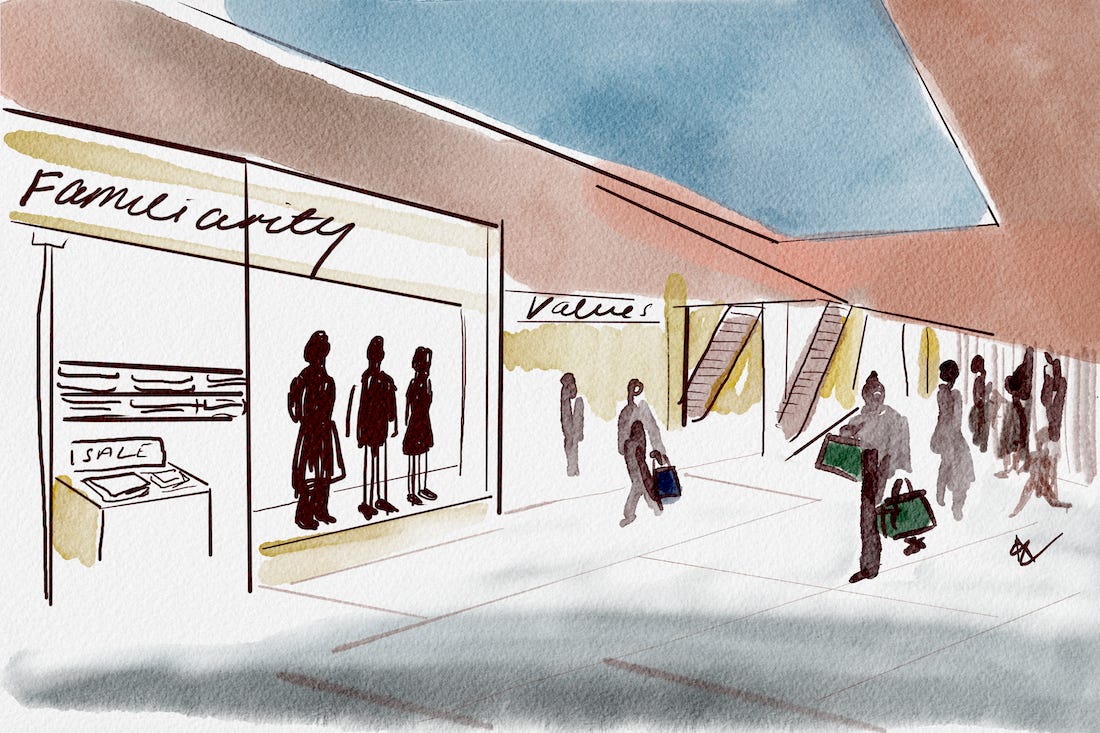
Having lived so many years on the internet, first as a fashion influencer and in the last six years, a “fashion educator”, I see the same habit that makes shopping so much harder than it should be. One of the most common questions I’m asked is, “where should I shop?” or a variation of that is, “what do you think of X"?”. Both questions signal that as a society, the majority of us take a macro level approach to shopping. This means we look to brands to serve our fashion needs and desires. But why do we still do this when it’s clear that this path hasn’t been effective in making shopping a positive experience? From researching my book Why Don’t I Have Anything To Wear?, I’ve uncovered three main types of shoppers that fall into this trap:
We want to buy familiarity: this shopper relies on a brand’s positive historical reputation rather than the current offerings. E.g. Marks and Spencer
We want to buy assurances: this shopper is taken by the hype of a brand and misinterpret buzz for some form of guarantee. Trust-building based on public consensus has proved effective. Just consider the nature of five star ratings and customer reviews. E.g. Damson Madder, Djerf Avenue
We want to buy emblems of our values: this shopper is highly conscious of what a brand represents. It doesn’t always need to be ethics based, it just needs to signal aspects that matter to them, i.e. cultural alignment, sports or music interests. E.g. Kith and Ralph Lauren
Disappointment exists because there was a degree of expectation. Some part of us regarded the brand we chose as a “good” or in the very least, a safe option. And there lies the mistake. Shopping according to entire brands doesn’t work on a structural level. It’s almost contradictory to how the business is set up, unless of course its almost a single category brand like accessories and footwear. Shoppers see one brand, but the design team for each category (i.e. knitwear is separate to soft fabrics) is different. Within that, the budgets and the suppliers can differ too. A good visualisation of this is how & Other Stories used to have “Ateliers”, collections inspired by the style from the various cities it was named after. However, most people outside of fashion design don’t realise that jeans are a different category to tailored trousers. I mean logically, both are bottoms, right?
We think we’re shopping well but the plot is all too familiar. We recall the time we bought a fantastic jacket from brand A, which increased our confidence in them. So we purchase other items and gradually it dawns on us that they don’t quite work. Very little has lived up to the jacket, the buy that made us think we found a “good” brand. Interestingly, women have much less brand loyalty than men and arguably, female shoppers recognise much faster that there’s something off about the labels that used to be reliable. In womenswear, its common that less attention and money is paid to fit and fabrics, which makes a slip in quality standards all the more noticeable.
Shopping often makes us feel confused, frustrated and like we’ve wasted our money. We become hyper-vigilant against brands that we once felt served us well and often become critical over things that won’t actually improve our future experience. Things irrelevant to the issue at hand, like what country the item is manufactured in or that there’s a new head of design. Again, this is farfetched because the impact of factors like these is not the most influential to the quality of the output. It’s also unhelpful to fixate on because it’s beyond our control.
There is nothing wrong with maintaining the core purchase motivations of familiarity, assurance and values. In fact, I think it makes for a fantastic foundation to relearn how to shop. There is just one small adjustment to be made. Instead of relying on entire brands, we would benefit more to shift the focus to specific wardrobe needs. I’m talking about assessing each garment as if they weren’t attached to the brand label. I’m talking about pure meritocracy here. A world where a dress won’t get extra points just because its mum is Prada.

 Tiktok failed to load.
Enable 3rd party cookies or use another browser
Recently, I posted a roundup of the brands that I reviewed in 2025. They were ranked in tiers on whether they underdelivered, passed or exceeded expectations when it came to offering value clothing. They were assessed on quality in comparison to competitors and consistency across reviews and between categories. Some of the results may surprise you, so let me know which brands you thought would do better… or worse.
Hello, so happy to connect with you 🤍 I just subscribed to your content, and I hope you feel like subscribing to mine too 💌 xx
I'll check out your book. I remember reading an article several years ago about the difference in the way men and women shop for clothing. Women shop for many reasons--they like to, they want to appear well put together, for themselves and for others, and as a way to grow their self-esteem. Men shop for clothing with one goal in mind--not to look stupid. Yes a gross exaggeration for both men and women, but generally true...